What is the best month to visit Lucerne, Switzerland?
Month-by-month advice for visiting Lucerne, covering weather, boat schedules, paddle steamer season, crowds and prices on Lake Lucerne.
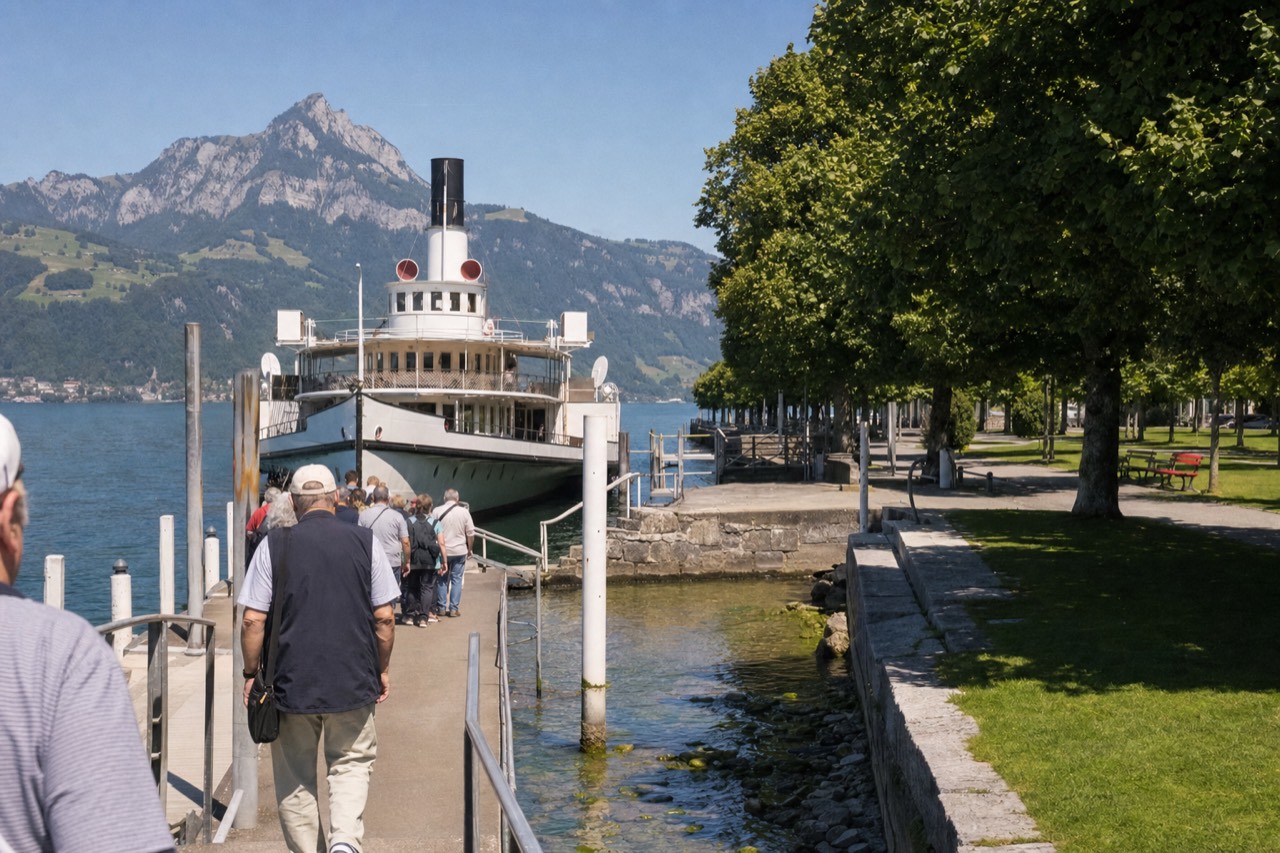
Lucerne sits on a lake that covers roughly 114 km² and drops to a depth of 214 m at its deepest point, a body of water with four arms, sheer cliffs and a fleet of boats that has been working it for generations. That geography shapes the whole question of when to come. The town is charming in any month, but the lake experience changes dramatically with the seasons, and the lake experience is why most people are here in the first place.
I have spent enough time poring over timetables, price sheets and steamer schedules to say this with confidence: the best month for Lucerne depends less on the weather forecast than on what you want the lake to do for you. A family wanting swimming weather and a full menu of cruises should aim differently from a couple wanting a quiet paddle steamer run with golden light and half the crowds. A budget traveler holding a rail pass has a third calculus entirely, and a photographer chasing low October light has a fourth.
What is the best month to visit Lucerne, Switzerland?
The best month to visit Lucerne is June, with September a very close second: both deliver warm, cruise-friendly weather, the full summer boat schedule, and noticeably fewer tourists than July and August, while paddle steamers are running and lake-side towns like Weggis and Vitznau are easy to reach by boat.
June is the month where everything lines up. The Lake Lucerne Navigation Company, the official operator known as SGV, runs its summer timetable, which means the fullest selection of departures across the lake's four arms. The five historic paddle steamers are out on the water, since their season runs primarily in summer. Daylight stretches past nine in the evening, so a late afternoon cruise still lands in sunshine. And the July and August tour-bus waves have not yet arrived, so you can book a boat the day before rather than the week before.
September edges ahead for one reason: the water. After a summer of warming, the lake is at its pleasantest for anyone tempted to swim from the lidos in Weggis or Lützelau, and the first hints of autumn color start creeping down the hillsides toward the end of the month. The trade-off is that the summer timetable starts tapering off as autumn schedules take effect, so a handful of the more obscure connections disappear.
If your priority is the famous Golden Round Trip to Mt. Pilatus, boat from Lucerne to Alpnachstad, cogwheel train up, cable car down, then any month from late May through mid-October works. The most popular guided version of that loop, the Mt. Pilatus Cable Car, Cogwheel Train & Lake Cruise from Best of Switzerland Tours, carries a 4.7 rating across 2,734 reviews and starts from around $202 (checked September 2026), and its listing notes it is likely to sell out in peak months. June and September are exactly when you get the same full loop with more breathing room.
One point that surprises first-time visitors: the lake never closes. Scheduled SGV services run year-round, with a reduced winter schedule, so there is genuinely no month when you cannot get out on the water. The question is how much water, on which boat, and at what price.
Which months have the best weather for a lake cruise?
For a lake cruise, the most reliable months are June through September, with July the warmest and September the most settled; scheduled boats run in all weather and every vessel except the electric motor vessel Rütli is wheelchair accessible, so rain changes the view but rarely the departure.
Lucerne's climate is temperate thanks to the lake, which moderates both winter cold and summer heat. July and August are the warmest months and the ones where a one-hour cruise in an open deck seat is genuinely comfortable. May can be lovely or soggy, sometimes in the same afternoon. October brings crisp air and the best light of the year for photography, with low sun raking across the Pilatus massif, but you will want a jacket on deck.
A detail worth knowing before you pack: weather works differently for the operator than for you. Under SGV's terms and conditions, poor or inclement weather is not, by itself, a valid reason for a customer-requested cancellation or refund. The boats sail. In genuine extremes, SGV may reschedule or cancel a sailing itself, but a gray sky and drizzle will not stop the catamaran. Plan accordingly, and treat a rainy-day cruise as an atmospheric bonus rather than a lost booking.
Here is how the year breaks down for lake weather and cruise conditions:
| Month | Typical lake cruise feel | Boat schedule | Crowd level |
|---|---|---|---|
| January | Cold, quiet, misty water | Reduced winter schedule | Very low |
| February | Cold, occasional föhn warm spells | Reduced winter schedule | Low, rising at Carnival |
| March | Chilly, unpredictable | Shoulder, building back | Low |
| April | Changeable, spring color on slopes | Shoulder season | Moderate |
| May | Mild, frequent showers | Summer schedule returns | Moderate |
| June | Warm, long evenings | Full summer schedule | Moderate |
| July | Warmest, busy decks | Full summer schedule | High |
| August | Warm, occasional thunderstorms | Full summer schedule | High |
| September | Settled, best water for swimming | Summer timetable tapering | Moderate |
| October | Crisp, superb light | Autumn schedule | Low to moderate |
| November | Grey, fog on the water | Reduced schedule | Very low |
| December | Cold, festive lights on shore | Reduced schedule, special trips | Moderate around Christmas |
The table above is a planning guide based on the lake's published seasonal schedule pattern rather than a weather guarantee; check the forecast and the operator's live timetable before locking in a specific sailing.
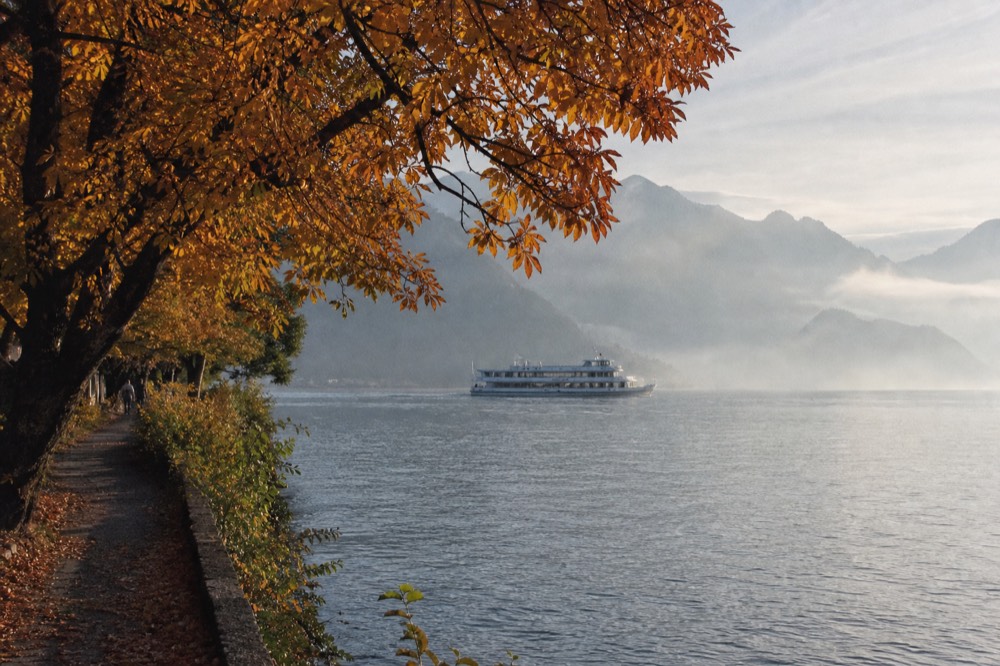
For a short cruise that works in absolutely any weather, the one-hour Discovery Cruise from Lucerne is the workhorse option, from around $31, with a 5 rating on its listing (checked September 2026). It sails in all conditions, which makes it the ideal fallback if your mountain day gets rained off. That flexibility is exactly why I point indecisive travelers toward it: you are buying an hour on the water, not a bet on the forecast.
When is high season in Lucerne, and should you avoid it?
High season runs July through August, plus a sharp spike in the two weeks around Christmas, and while crowds and hotel prices peak then, it is also when every cruise, steamer connection and mountain combo runs at full frequency, so avoid it only if quiet matters more than choice.
July and August bring the tour groups. The Mt. Pilatus combo tour, rated 4.7 across 2,734 reviews (checked September 2026), is flagged on its own listing as likely to sell out in this window, and that is not marketing language: the Golden Round Trip has a fixed capacity per departure, and summer weekends fill it. Hotel rates in Lucerne and the lake villages climb accordingly, and restaurant terraces along the waterfront need reservations.
The counter-argument for coming anyway: frequency. In high summer there are simply more boats, on more routes, more often. If you want to hop Lucerne to Weggis for a swim, wander an hour, then catch a different boat to Vitznau and another home, the summer timetable makes that improvisation possible. In November it does not. The scheduled Lucerne to Vitznau run takes about an hour each way, and Weggis roughly 40 to 50 minutes, so a lake-hopping day is easy arithmetic in summer and a study in careful planning off-season.
My honest recommendation is a compromise. Late June gives you the full schedule at close-to-full warmth, and the week after Swiss school holidays end in August is one of the loveliest, emptiest stretches of the whole year on the water.
If the mountain-and-lake loop is the centerpiece of your trip, this is the one booking worth securing before you fly, especially for July and August departures.
If you are still weighing whether the lake itself justifies the trip, our longer piece on whether a Lake Lucerne cruise is worth it breaks down the value question by cruise type and budget.
What is the cheapest month to visit Lucerne?
The cheapest months are November through March, excluding the Christmas and New Year weeks, when hotel rates drop hard and lake travel gets cheaper too, since a Lucerne to Weggis one-way second-class ticket costs CHF 23.00 and a second-class day pass covering the whole lake is CHF 86.00 at full fare.
Winter is when Lucerne remembers it is a mid-sized Swiss town rather than a postcard. The reduced boat schedule means fewer departures, but the fares on scheduled services do not carry a winter premium, and the quiet of a cold crossing with steam trailing off the water is something summer visitors never see. Bring layers: decks are open and the wind off the lake has bite in January.
There is a second lever for savings that most visitors never pull: rail passes. On scheduled SGV services, the Swiss Travel Pass and GA Travelcard give 100% free travel, and the Swiss Half Fare Card gives a 50% discount. Tell-Pass and the Lucerne Travel Pass are also valid on scheduled boats. If you are already holding one of those passes for train travel, the lake becomes effectively free transportation, which reframes the whole budget of your trip. A family on Swiss Travel Passes can spend an entire day hopping between Lucerne, Weggis and Vitznau without buying a single boat ticket.
The price gaps worth knowing:
| Travel item | Full fare | With Swiss Travel Pass | Notes |
|---|---|---|---|
| Lucerne to Weggis, one-way, 2nd class | CHF 23.00 | Free | Scheduled boat, roughly 40-50 min |
| Lucerne to Vitznau, one-way | On the operator's price page | Free | Scheduled boat, approx. 1 hour |
| Day pass, 2nd class, all year | CHF 86.00 | Free | Whole lake, all scheduled services |
| Halbtax (Half Fare Card) discount | 50% off | n/a | Applies to scheduled fares |
Guided tours are priced separately from scheduled services, so the combo tours and specialty cruises keep their own rate cards year-round; check each operator's live listing for current prices before assuming a winter discount applies to those.
When can you ride a historic paddle steamer on Lake Lucerne?
Paddle steamer season runs primarily through summer, roughly May to October, when all five of SGV's historic steamers, the Uri (1901), Unterwalden (1902), Schiller (1906), Gallia (1913) and Stadt Luzern (1928), operate scheduled and special sailings, with the Stadt Luzern running until 18 October and the Uri running special winter-themed trips in November and December.
This is the fact that should bend your calendar. Plenty of guidebooks tell you Lucerne has paddle steamers; almost none tell you that they are seasonal creatures, and that the fleet of five, alongside 14 motor vessels, thins out dramatically once autumn sets in. If a steamer crossing is on your bucket list, and for many travelers it is the single most memorable hour of the trip, you need to be here between late spring and mid-October to choose from the full fleet.
The steamer experience is a different animal from the modern boats. The oldest, the Uri, has been in service since 1901, working this same water for well over a century. The engines are visible, the paddle wheels churn at the stern, and the pace is deliberately unhurried. On the scheduled steamers you pay the ordinary fare; on culinary and themed steamer cruises you pay a premium for a meal wrapped around the crossing.
For a splurge version, the exclusive steamboat experience with a five-course menu runs five hours, from around $682, holds a 5 rating (checked September 2026), and operates daily except Mondays with an evening departure on Wednesdays. It is the kind of booking that defines a trip, and it is firmly a warm-months product, which makes June or September the smart months to book it: same experience, easier availability.
Is winter in Lucerne worth it?
Winter is worth it if you want Christmas markets, snow on Pilatus, fog-free mornings above the lake inversion, and near-empty boats, but expect a reduced schedule, cold decks and short days, with the Christmas market weeks the one period when the town feels as busy as July.
Do not write winter off. Lucerne's old town under fresh snow, with the Kapellbrücke's lights reflecting off the Reuss, is genuinely beautiful, and the lake crossings in December have a stillness that summer cannot offer. The reduced winter schedule still connects the core villages, and a steamer or motor vessel cutting through low morning mist while the peaks sit in sunshine above the fog line is one of the region's signature sights.
The catch is arithmetic. Fewer departures means less freedom to improvise, and a lake-hopping itinerary that takes one casual day in July can take two in January. Daylight is short, so a full Golden Round Trip to Pilatus, with its boat leg, cogwheel railway and cable car, becomes a tighter squeeze. Prices for hotels drop sharply outside the Christmas fortnight, which partly compensates.
February brings Carnival, when Lucerne's streets fill with lanterns, masks and drums, a spectacle worth planning around if you like festivals and worth knowing about if you do not, because the town's rhythm changes completely for those days.
How does the boat schedule change through the year?
Scheduled SGV boats run every month of the year, moving from a full summer timetable with the most routes and departures, through shoulder-season reductions in spring and autumn, to a reduced winter schedule that still serves the main villages but drops many secondary connections.
This rhythm, published by the operator on its official timetable pages, is the real backbone of the best-month question. The operator's seasonal timetable shows exactly which sailings survive into which months, and it is the single most useful planning link for this trip. The summer schedule is the one where the lake feels like a public transport network; the winter schedule is the one where it feels like a lifeline service.
Practical translation: in summer you can decide on the pier. In shoulder months you should check the timetable the night before. In deep winter you should plan each leg in advance and build in buffer, because a missed connection might mean a two-hour wait rather than a twenty-minute one.
A sensible month-by-month plan looks like this:
| If you visit in... | Best use of the lake | One thing to book early |
|---|---|---|
| May | Spring slopes, first steamer sailings | Steamboat dining cruises |
| June | Full schedule, moderate crowds | Nothing essential, but book Pilatus for weekends |
| July | Swimming plus evening cruises | Mt. Pilatus Golden Round Trip |
| August | Warm water, lake hopping | Steamboat dining cruises and mountain combos |
| September | Steamer runs, best light | Steamboat experience with dinner |
| October | Photography, crisp crossings | Nothing critical, schedule is thinning |
Common questions about visiting Lucerne by month
The short answers: June is the best all-round month, September the best compromise between warmth and quiet, boats run all year on a reduced winter schedule, paddle steamers sail mainly from May to October, and the cheapest travel window is November through March outside the Christmas fortnight, especially if you hold a Swiss Travel Pass.
What is the best month to visit Lucerne, Switzerland?
June is the strongest single month, with September a close second. Both combine the full summer boat schedule and paddle steamer operation with warm, cruise-friendly weather and crowds well below the July and August peak.
Do boats run on Lake Lucerne in winter?
Yes. Scheduled SGV services run year-round with a reduced winter schedule, so the main lake villages stay connected even in January and February. You just have fewer departures to choose from.
What is the rainiest period to plan around?
Lake Lucerne gets showers most reliably in late spring, particularly May, and summer thunderstorms in July and August. Boats sail regardless; under the operator's terms, weather alone is not grounds for a customer-requested refund.
When do the paddle steamers run?
Primarily in summer, roughly May through October. The Stadt Luzern is scheduled until 18 October, and the Uri runs special winter-themed trips in November and December.
Is there a cheap season for lake travel?
Boat fares on scheduled services do not carry a seasonal premium, and winter hotel rates are the year's lowest outside Christmas. A second-class day pass covering the whole lake costs CHF 86.00 at full fare, and Swiss Travel Pass holders travel free on scheduled services.
Which month is best for combining a cruise with Mt. Pilatus?
Any month from late May through mid-October, when the full Golden Round Trip loop operates. June and September offer the same experience as July with fewer sellouts and cooler hiking temperatures on the summit.
Whatever month you land on, the lake will be there, and a boat will be leaving from a pier not far from the chapel bridge. Choose the month that matches your temperament: full and lively in summer, golden and quiet in September, still and misty in winter. For the wider picture of what to build into your itinerary, start with Lake Lucerne Boat Cruises. If you keep hearing the phrase "river cruise" applied to this lake, here is what that actually means. Pair either month's plan with our what not to miss in Lucerne checklist so the boat time fits around the rest of the city.