What not to miss in Lucerne, Switzerland?
The things genuinely worth your time in Lucerne, from the Chapel Bridge and the old town to the lake cruises and mountain trips that make the city a base worth lingering in.
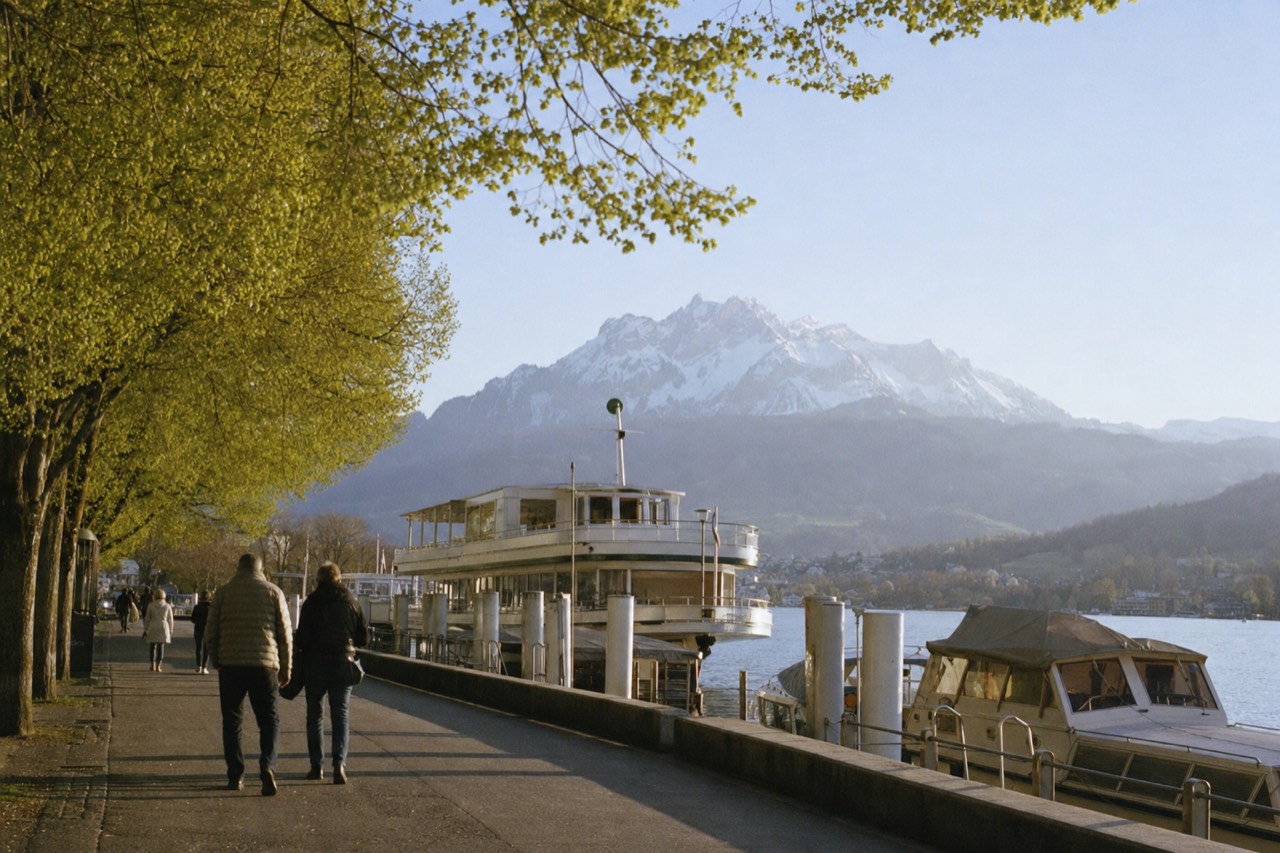
Lucerne has a strange reputation problem. It appears on more central-Switzerland itineraries than almost any city outside the big three, yet most visitors treat it as a half-day stop between Zurich and Interlaken, snap the Chapel Bridge, and leave. That is a mistake, and not only because the city deserves longer. The lake it sits on, the Vierwaldstättersee, is 114 square kilometres of water reaching 214 metres at its deepest point, and half of what makes Lucerne worth visiting lives out on that lake, not in the old town.
What not to miss in Lucerne, Switzerland?
The five things that genuinely earn their place are the Chapel Bridge and old town, a lake cruise on a historic paddle steamer, the Mt. Pilatus Golden Round Trip, the Lion Monument and Musegg Wall, and an evening walk along the lakefront promenade. Everything else in Lucerne is pleasant filler around those anchors.
That list sounds obvious, but the order matters. The old town sights cluster together and take two relaxed hours. The lake and mountain trips take half a day each, and they are the parts people skip when they rush. If you have three days, you can do all five properly. If you have one, pick the old town in the morning and a one-hour cruise in the afternoon, and you will still have seen the essence of the place.
Start with the old town, because it is compact and free. The Chapel Bridge, built in the first half of the 14th century, is the oldest covered wooden bridge in Europe, and the Water Tower beside it is the most photographed structure in Switzerland. Cross it slowly. The interior panels, painted centuries ago, depict the city's history, and most people walk straight past without looking up. Once across, the cobblestone lanes of the right bank hold frescoed facades, small squares and enough cafés to justify a long coffee stop. Order a Luxemburgerli macaron from the Confiserie Bachmann counter if the queue is short, and take your coffee standing at a window the way locals do. The old town rewards slow movement far more than efficient sightseeing.
The Lion Monument is a short walk north. Mark Twain called the dying lion carved into the sandstone rock "the saddest and most moving piece of stone in the world," and it commemorates the Swiss Guards who died defending the Tuileries in Paris. It costs nothing, takes only a few minutes, and stays with people longer than most paid attractions. The Musegg Wall, just beyond it, is a preserved 14th-century city wall with nine towers, four of which you can climb in season for the best free view over the rooftops to the lake. The Zyt tower, with its historic clock mechanism, is the one most people remember, because its clock is allowed to strike one minute before all the others in the city, a tradition that still holds today.
Then there is the lake. This is where Lucerne separates itself from other pretty Swiss cities, and where Lake Lucerne Boat Cruises comes in. The official operator, the Lake Lucerne Navigation Company, runs scheduled boats year-round with a reduced winter schedule, and its fleet includes five historic paddle steamers, the oldest of which, the Uri, was built in 1901. Riding one is not a theme-park novelty. These are working vessels on real timetables, and a trip across the water on a steamer is the single most atmospheric thing you can do here.
Is the Chapel Bridge and old town really worth the crowds?
Yes, and the crowds are manageable if you go early. The bridge and old town are the historic core of Lucerne and take about two hours at a slow pace, and before 9 a.m. you will share them with locals rather than tour groups.
The bridge itself is the icon, but the old town on both banks rewards wandering without an agenda. Weinmarkt square, the Kornmarkt and the riverside row of frescoed buildings along the Reuss are the highlights, and the modern KKL culture and convention centre by the lake, with its sweeping roof by Jean Nouvel, gives the city a contemporary counterweight to all that medieval timber. The Spreuer Bridge, downstream and far quieter than the Chapel Bridge, has its own painted ceiling, a centuries-old Dance of Death cycle, and you will often have it nearly to yourself.
| Old town sight | What it is | Time needed | Cost |
|---|---|---|---|
| Chapel Bridge and Water Tower | 14th-century covered wooden bridge, oldest in Europe | Under half an hour | Free |
| Spreuer Bridge | Quieter bridge with Dance of Death paintings | A short stop | Free |
| Lion Monument | Rock-carved memorial, described by Mark Twain as the saddest stone in the world | A short stop | Free |
| Musegg Wall towers | Climbable 14th-century wall towers with roof views | About an hour | Free |
| KKL Lucerne | Lakeside concert and convention centre | A quick look | Free to view |
One practical note: the old town is small, and everything above is within a short walk of the main station. There is no need for a hop-on itinerary. Pick a direction, walk, and stop when something catches your eye. The city rewards that approach far more than a checklist. If you are travelling with children, the bridge and the wall towers are the two they will actually enjoy, and the swans along the Reuss do more entertaining than any paid attraction in the centre.
Which lake cruise should you take from Lucerne?
For most visitors the answer is a one-hour sightseeing or panorama cruise from the main jetty, because it fits any schedule and shows the lake's signature scenery, the cliffs of the Pilatus massif and the shoreline villas, in a single loop. If you have longer, the paddle steamer toward Vitznau is the upgrade that matters.
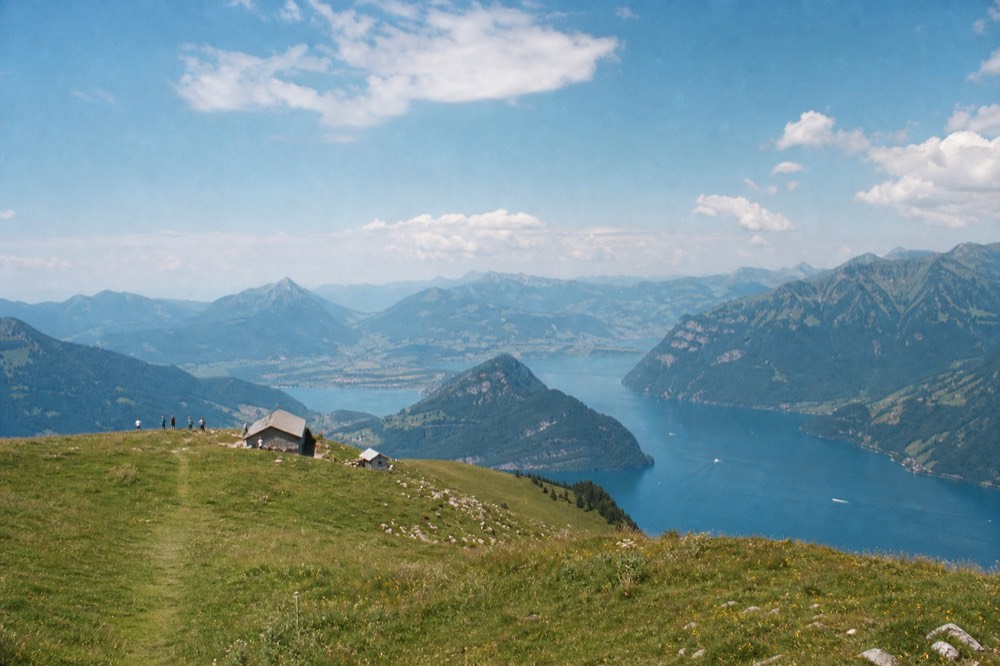
The lake is the reason Lucerne exists where it does, and its shape is unusual: a fjord-like body with arms reaching into four different cantons, framed by cliffs that rise almost directly from the water. A scheduled sailing from Lucerne to Vitznau takes roughly one hour each way, and Lucerne to Flüelen takes about two hours forty minutes, so you can calibrate your commitment. Even the shortest cruise delivers the core experience, which is the view back at the city, the Pilatus massif ahead, and the rhythm of a boat that runs whether or not you planned ahead.
The fleet matters more than you might expect. Of the operator's vessels, five are historic paddle steamers, including the Unterwalden (1902), the Schiller (1906), the Gallia (1913) and the Stadt Luzern (1928), alongside fourteen motor vessels. The steamers run primarily in summer, and the 2026 season includes the Stadt Luzern sailing until 18 October, with the Uri running special winter-themed trips in November and December. If a steamer is on your route when you visit, take that sailing, not the motor boat an hour later. The difference is the whole point. The steam is visible, the deck vibrates gently underfoot, and the engine room on most of these vessels can be viewed from a gallery, which turns a simple crossing into something closer to a living museum.
For a first visit, the one-hour options are the Panorama-Yacht Saphir, a modern sightseeing yacht with wraparound glazing, or the catamaran cruise, both run by the lake's navigation company and both rated above 4.4 stars from well over a thousand reviews each. The yacht is the better pick in cool or cloudy weather; the catamaran has open deck space that wins on a clear afternoon. Prices are listed on the operator's live listing rather than fixed here, so check the current fare when you book. Whichever you choose, sit on the side facing the Pilatus massif on the way out, because that is where the scenery stacks up most densely, and the return leg gives you the city skyline instead.
If you want the lake as a full experience rather than a taster, the Grand Lake Cruise, the round trip from Lucerne to Flüelen and back, runs about five and a half hours and passes the Tell's Chapel, the Rütli meadow and the Axenstein cliffs, the scenery that made this lake the setting of Switzerland's founding legend. It is a big chunk of a day, but it is the version of the lake that people remember a decade later. Bring a book, order something from the onboard restaurant, and let the cliffs go by. This is the cruise for travellers who have already seen the postcard version of Lucerne and want the substance underneath it.
A practical way to match the cruise to your itinerary is to work backwards from your time budget. With only a spare hour, take the yacht or catamaran loop and treat it as scenery plus a rest between sightseeing stops. With a half day, ride a scheduled service toward Vitznau, time your return around the steamer departures, and you get both the modern convenience and the historic vessel in one outing. With a full day and no competing plans, the Flüelen round trip is the clear choice, especially if the onboard restaurant appeals more than rushing back to the city.
Season and weather should shape the decision as much as the clock. Steamers are primarily a summer proposition, so if you are visiting between roughly late autumn and spring, plan around the motor vessels and the winter-themed Uri trips in November and December rather than expecting the full steamer fleet. On a grey day, the Saphir's wraparound glazing keeps the views without the wind; on a bright one, the catamaran's open deck is where you want to be. And whatever you book, keep the cancellation window in mind: reserving ahead costs you nothing if plans change more than 24 hours before departure, but waiting until you arrive risks missing the themed and culinary sailings that sell out first.
Should you book a cruise before you arrive?
Walk-up tickets on scheduled services are usually available, but themed and culinary cruises sell out, and the Pilatus combo tours are flagged as likely to sell out in peak season. Free cancellation up to 24 hours before departure is standard on most bookable tours, so there is little downside to reserving ahead.
What day trips from Lucerne are worth your time?
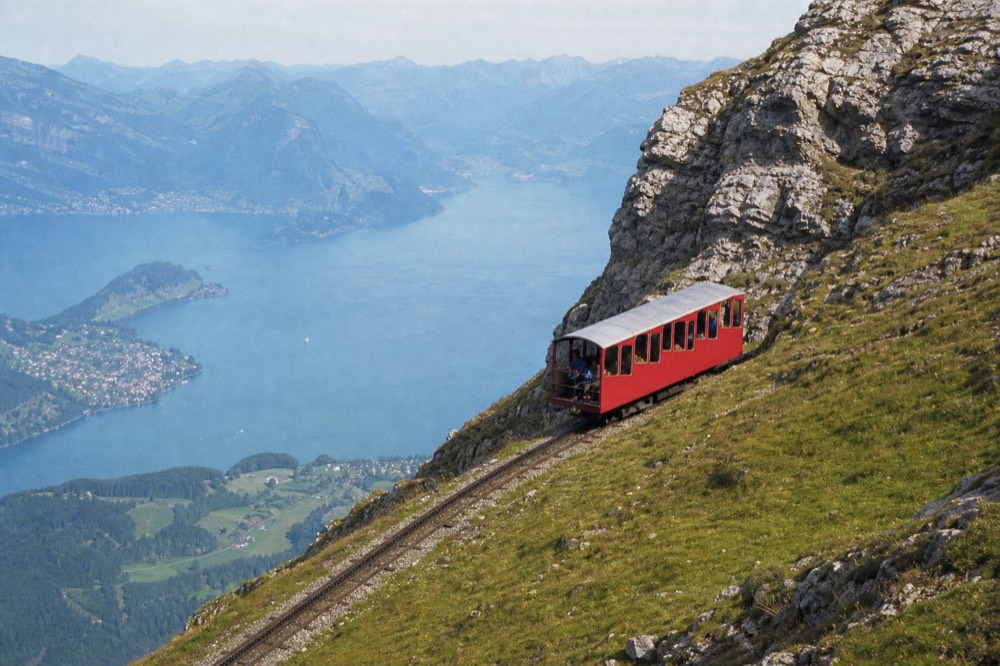
Mt. Pilatus is the standout day trip, done best as the Golden Round Trip: boat across the lake to Alpnachstad, the world's steepest cogwheel railway up, and a cable car down the other side to Kriens. Mt. Rigi is the strong alternative, reached by boat to Vitznau and a historic mountain railway. Both are half-day to full-day trips.
Pilatus dominates the skyline southwest of the city, and the Golden Round Trip is the rare combo tour that is genuinely worth its structure. The boat leg alone would justify the day: you cross the lake with the mountain growing ahead of you, then climb it on a cogwheel railway that is the steepest in the world. At the summit, the panorama spans the Alps and, on clear days, reaches far across the plateau. The descent by aerial cableway and panorama gondola to Kriens finishes the loop, and a short bus ride returns you to Lucerne. The tour version that bundles the boat cruise with the cable car and cogwheel train holds a 4.7 rating from 2,734 reviews (checked September 2026) and is the most reviewed excursion in the region, which tells you something about how well it works.
Rigi, the "Queen of the Mountains," is the gentler sibling. You reach it by scheduled boat to Vitznau, about an hour across the lake, then Europe's first mountain railway winds to the top. The views are broader and softer than Pilatus, with the lake laid out beneath you in all its arms. In winter the steamers reduce their schedule but keep running, so the trip stays feasible year-round, and the cogwheel railway operates in most conditions. Families tend to prefer Rigi for exactly this reason: the boat ride is long enough to feel like an event, the summit has easy walking paths, and nothing about the day is strenuous.
A few practical points for either mountain:
- Check the summit weather forecast the morning you go, not the Lucerne forecast. The two can differ sharply.
- The Swiss Travel Pass and GA Travelcard cover scheduled lake boats entirely, and the Swiss Half Fare Card gives 50 percent off, so pass holders should price the components separately before buying a bundled tour.
- A one-way second-class boat fare from Lucerne to Weggis is CHF 23.00 at full fare, and a full-day second-class lake pass is CHF 86.00, useful if you plan to hop on and off all day.
- If you are weighing the two cities as bases, Lucerne and Interlaken suit different itineraries, and the lake is the reason Lucerne often wins for shorter stays.
How many days do you need in Lucerne?
Two days covers the old town, one lake cruise and one mountain trip at a comfortable pace. Three days lets you add the Grand Lake Cruise or a second mountain, and four is the point at which you stop rushing and start living like a local. Most travellers are best served by three.
The arithmetic is simple. Day one: old town, Chapel Bridge, Lion Monument, Musegg Wall, and a one-hour cruise in the late afternoon when the light comes across the water. Day two: Pilatus or Rigi, a full-day loop that ends with dinner near the lakefront. Day three: the deeper lake, either the Flüelen round trip or a lazy morning in Weggis or Vitznau, the small resort villages on the northern shore that most day-trippers never see.
The season shapes the plan more than the calendar suggests. If you are working out the best month to visit, summer brings the full paddle-steamer schedule and warm lake evenings, while winter trims the timetable but keeps the core sailings running. And if you land on a wet day, do not assume the lake is off the table: the one-hour discovery cruise operates in all weather, and low cloud over the water has a drama of its own. The operator's terms are worth knowing here, though. Poor weather on its own is not accepted as a reason for a customer-requested cancellation or refund, and only extreme meteorological conditions let the operator reschedule or cancel a sailing. In other words, the boat goes, and so should you.
There is a quieter argument for staying longer that has nothing to do with sightseeing. Lucerne is one of the few Swiss cities where the evening is genuinely part of the attraction. Once the day-trippers leave, the lakefront promenade belongs to joggers, couples and the swans, the old town restaurants fill with people who live here, and the mountains turn pink in the sunset in a way that no photograph quite captures. Travellers who stay two nights instead of one consistently describe the second evening as the moment the city clicked for them.
Common questions about Lucerne
Lucerne's unmissables are the Chapel Bridge and old town, a paddle-steamer lake cruise, the Mt. Pilatus Golden Round Trip, the Lion Monument with the Musegg Wall, and a lakefront evening walk. The city is compact and walkable, its scheduled boats run year-round, and most travellers get the full picture in two or three unhurried days.
What not to miss in Lucerne, Switzerland?
The Chapel Bridge and old town, a lake cruise on a paddle steamer, the Mt. Pilatus Golden Round Trip, the Lion Monument with the Musegg Wall, and a lakefront evening walk. Those five anchors hold almost everything that makes the city memorable, and the lake-based two are the ones most visitors regret skipping.
Is Lucerne walkable without a car?
Completely. The old town, both bridges, the Lion Monument and the Musegg Wall sit within a short walk of the main station, and the boat jetty is directly beside it. Cars are more hindrance than help in the centre, and parking is expensive.
Can you visit Mt. Pilatus and still be back in Lucerne for dinner?
Yes. The Golden Round Trip is designed as a day loop, and the boat leg back across the lake is part of the return. Most travellers finish in time for a lakefront dinner, particularly in summer when evening sailings run late.
Do Swiss rail passes work on the lake boats?
Yes. The Swiss Travel Pass and GA Travelcard give free travel on scheduled lake services, the Swiss Half Fare Card gives 50 percent off, and the Tell-Pass and Lucerne Travel Pass are also valid. Themed and culinary cruises are priced separately.
What if it rains during my visit?
The old town and museums cover a half-day, and the discovery cruise operates in all weather, so a rainy day is not a lost day. Only extreme conditions let the operator cancel a sailing, so assume the boat runs and dress for it.
Is one day in Lucerne enough?
One day gives you the old town and a one-hour cruise, which is a real taste but not the full picture. The mountain and the deeper lake, the two things that define Lucerne, each need half a day. If you can stretch to two or three days, do.
One question comes up often enough to answer separately: what Switzerland's rainy season actually does to a trip like this, since Lucerne's weather is changeable enough to plan around.