How Many Days in Lucerne Is Enough?
A realistic day-count plan for Lucerne: what actually fits into one, two or three days, and where a Lake Lucerne cruise belongs in each itinerary.
How Many Days in Lucerne Is Enough?
Two days is enough for most visitors: one for the old town, the Chapel Bridge and a short lake cruise, and one for a mountain excursion such as Pilatus or Rigi, which together cover both of the region's dimensions, the water and the peaks. With three days you can slow down, add a second lake leg or a museum morning, and stop rushing between sights.
That is the honest arithmetic, and it comes from geography more than opinion. Lucerne's old town is genuinely walkable end to end in under twenty minutes, but the experiences people travel here for, the lake and the peaks that ring it, are half-day blocks that cannot be compressed. The Boat Cruises Lake Lucerne schedule is built around exactly that rhythm: the boats leave from Bahnhofquai, directly opposite the train station, so a cruise is the easiest half-day block to slot into any plan.
The first question to settle is what kind of trip you are taking. A transit stop between Zurich and Italy is a one-day proposition. A first proper visit to Switzerland, with Lucerne as a base, deserves two or three. This article breaks down each day count honestly, including what you give up at each level, so you can match the plan to the trip rather than the other way around.
If you already know you want the water in your plan, these three picks cover the three most common day-count strategies: a short cruise that fits a tight day, a private charter that anchors a relaxed two-day visit, and a mountain-plus-boat combination that is the backbone of a full day.
What does one day in Lucerne actually get you?
A single day covers the old town, the Chapel Bridge, the Musegg Wall, and a one-hour cruise on the lake, but it rules out any mountain summit and any visit to the far southeastern arm of the water. You can see the lake from the deck and the town on foot in the same afternoon, yet you will leave knowing you saw Lucerne the place rather than Lucerne the region that gives the town its fame.
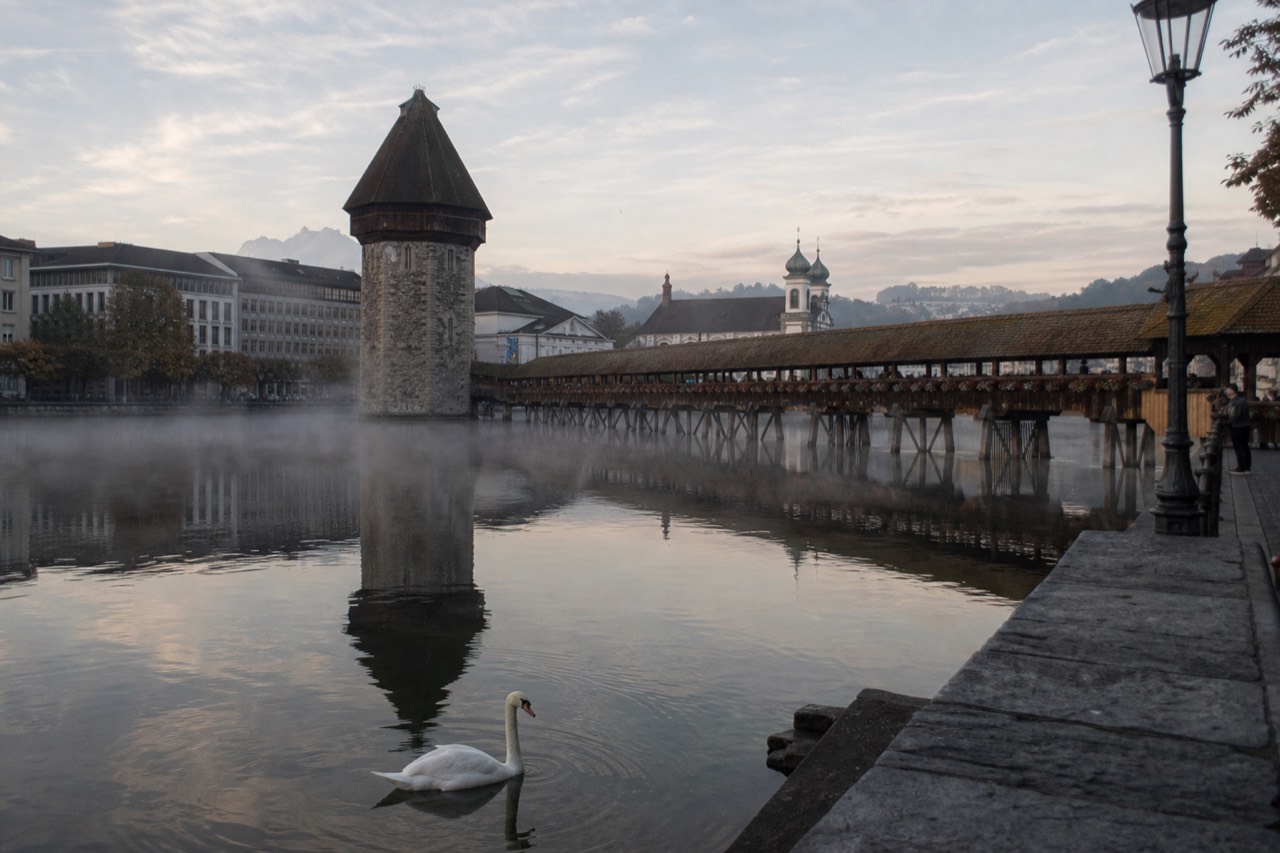
The realistic shape of a one-day visit is a morning in the old town and an afternoon on the water. The Chapel Bridge and the Jesuit Church sit within a few minutes' walk of the station. The Musegg Wall, with its towers and its views down over the rooftops, takes about an hour at a strolling pace. By early afternoon you are back at Bahnhofquai, and the pier infrastructure makes the cruise leg almost frictionless: the main hub is directly opposite the train station, and the 1-hour panorama cruise specifically leaves from Pier 7 at Schweizerhofquai (checked September 2026).
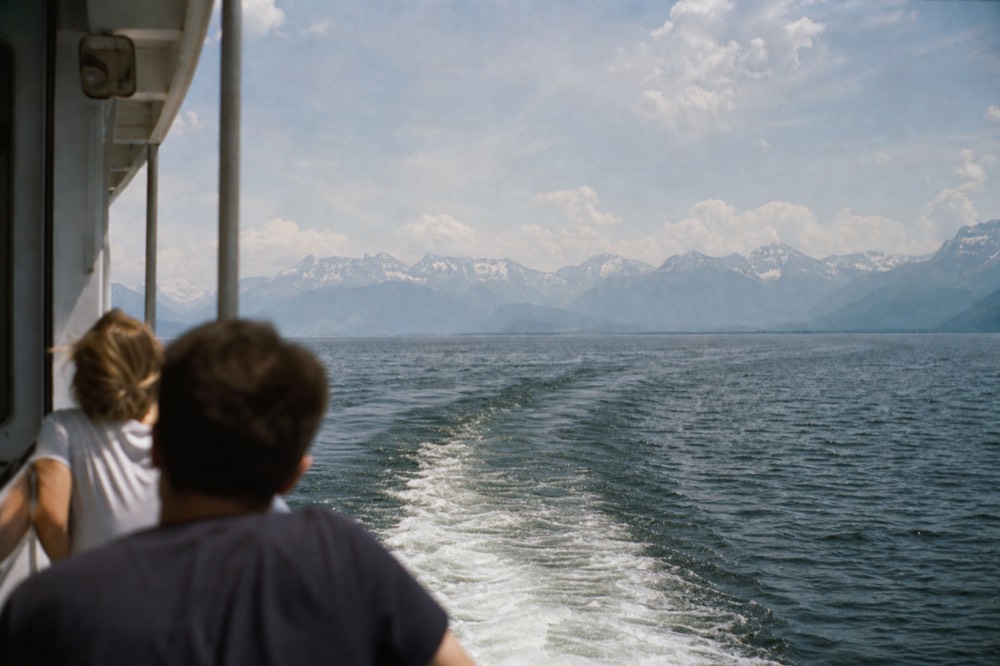
The one-hour cruise is the natural fit here. The Lake Lucerne 1-Hour Discovery Cruise runs about an hour and starts from $31 per person (checked September 2026), which buys you the classic panorama: the lake basin, the villas of the shore, and the wall of peaks at the far end. The catamaran alternative runs about the same duration from $37 per person and is rated 4.4 across 1,467 reviews (checked September 2026), so if the weather is calm and you want a smoother deck, it is a lateral move rather than an upgrade.
For a one-day visitor the discovery cruise is close to a fixed cost in time: an hour on the water, a few minutes of walking each way, and no schedule gymnastics. That reliability is exactly why it survives the tightest itinerary when almost nothing else does. Book a mid-afternoon departure and you can still make an evening train with margin to spare.
What one day costs you is the vertical dimension. Pilatus, Rigi, Titlis: all of them are half-day commitments minimum, and none of them fits alongside a proper old-town walk and a cruise in a single day without turning the day into a checklist sprint. If your day is fixed at one, choose the lake over the summit. The lake is Lucerne's identity; the summits are magnificent but interchangeable with other parts of Switzerland.
Is two days the sweet spot for a first visit?
Two days is the sweet spot for a first visit: day one for the town plus a cruise, day two for a mountain-and-boat round trip, with no need to rush either half. This is the plan that lets you experience both of Lucerne's dimensions, the water and the peaks, without cutting either one short, and it leaves room for the evenings that a one-day sprint always sacrifices.
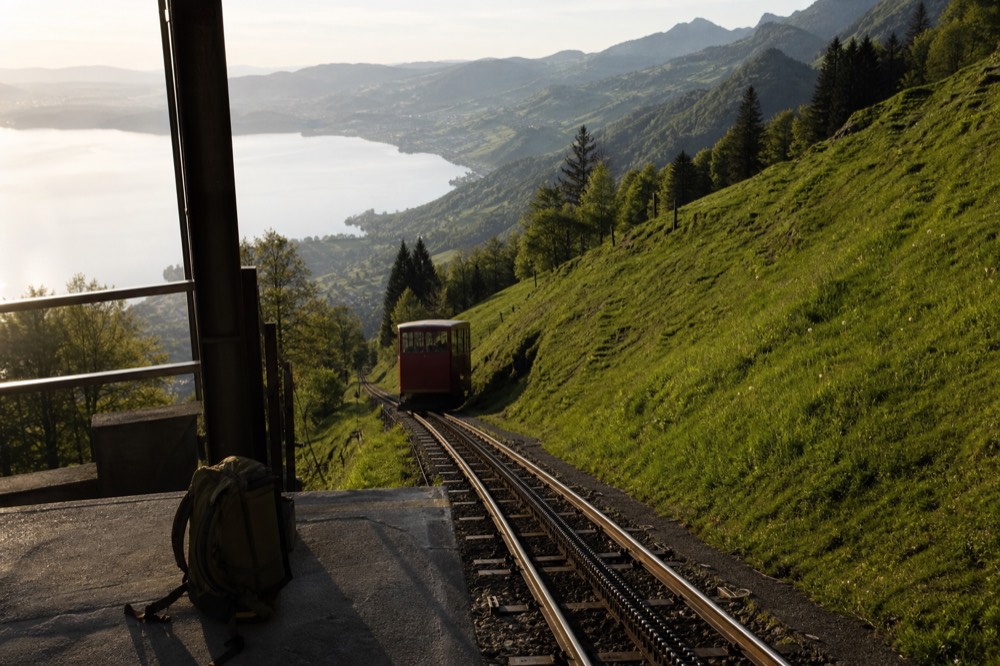
Day two belongs to the mountain. The classic move is a round trip that strings transport modes together, and the From Lucerne: Mt. Pilatus Gondola, Cable Car, and Boat Trip does exactly that in about half a day, from $147 per person (checked September 2026). You ride up by gondola, cross the summit on foot between the two cable-car stations, descend by the world's steepest cogwheel railway to Alpnachstad, and return across the lake by boat. The pier logic supports this: Pier 2 at Bahnhofquai serves the Alpnachstad connection, the Pilatus rail and cable-car interchange point.
The fuller version, Mt. Pilatus: Cable Car and Cogwheel Train plus Lake Cruise from Lucerne, runs a full day from $203 per person (checked September 2026) and is marked "Likely to sell out" on the live listing. That urgency flag matters for planning: if day two of a two-day trip is your only shot at Pilatus, book it before you leave home rather than hoping for a walk-up slot.
With two days you also gain evening slack. The old town after dinner, the bridge lit at dusk, a drink on a lakeside terrace: none of these make a one-day itinerary because a one-day visitor is already on a train out. Two days converts Lucerne from a sightseeing sprint into an actual stay.
What does a third day add that the first two don't?
A third day adds depth rather than landmarks: the far lake, a slower cruise, or a private charter, plus the museums and day trips that a tighter plan skips. It is the difference between seeing Lucerne and beginning to understand the region it anchors, because the long lake arms and the villages at their ends are where the scenery and the history stop being a backdrop and start being the point of the trip.
The strongest third-day move is going deeper into the lake itself. The lake is not one body of water but a series of arms cutting between mountains, and the far reaches, toward Fluelen at the southeastern end, are where the scenery turns from pretty to severe. Journey times from Lucerne make the arithmetic plain: about 45 minutes to Weggis, about 55 minutes to Vitznau, about 2 hours 10 minutes to Brunnen, and about 2 hours 45 minutes to Fluelen (checked September 2026). A round trip down the Urnersee arm is effectively a half-day excursion on its own.
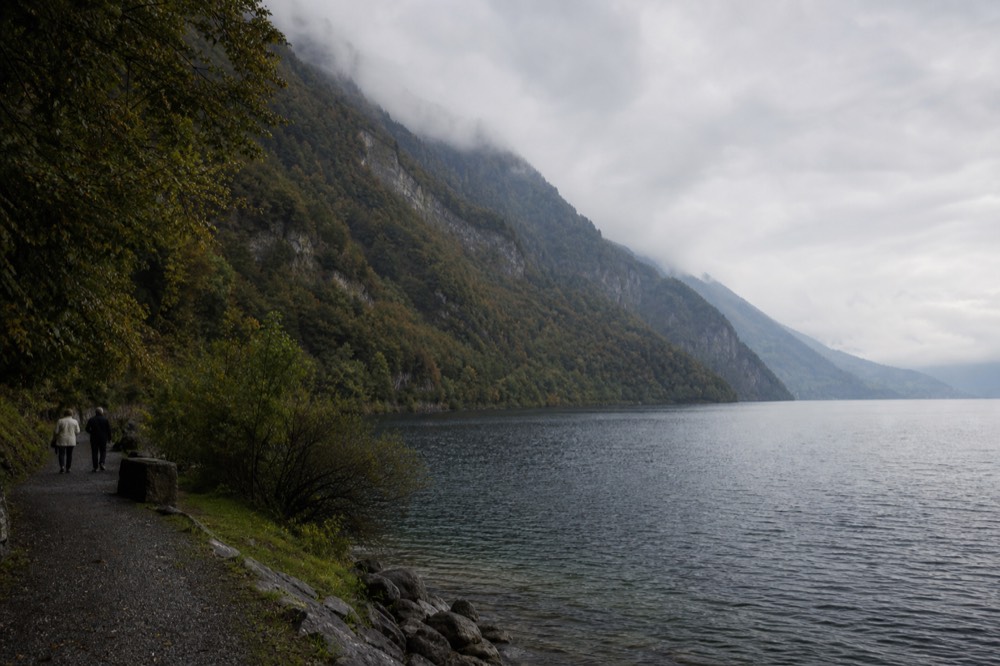
One structured option is the Ingenbohl: Roundtrip Lake Uri Cruise from Brunnen to Fluelen, about 1.5 hours from $54 per person (checked September 2026), which passes the Rutli meadow and Tell's Chapel, the two sites at the root of the William Tell legend. That is the kind of context a third day exists to absorb: the lake as a historical landscape, not just a view.
The other third-day shape is the private one. A Private Boat Tour on Lake Lucerne runs about 2 hours from $545 per group for up to 8 guests (checked September 2026), which reframes the price entirely: split across a family or a group of friends it lands in the same territory as individual tickets, but on your own schedule and your own route. For a slower, food-centered version, the Lake Lucerne: Private Boat Tour with Fondue and Sightseeing runs about 6 hours from $1,115 per person, and that figure is the platform's own literal per-person wording for a private charter for up to 4 guests, not a per-boat total (checked September 2026). Read it as a charter price before comparing it to anything.
How do season and weather change the day count?
Season changes the cruise leg far more than the town leg: the summer timetable supports any day count, while the reduced winter schedule means fewer sailings and a real case for trimming a planned third day. The town itself barely changes between June and January, but the lake's timetable changes a lot, and any plan that leans on long boat excursions should be built around the season band it falls in.
The three-band season structure matters most for a three-day plan built around long lake excursions. The full summer timetable, 23 May to 6 September 2026, runs the whole fleet on all routes. The autumn transition, 7 September to 18 October 2026, thins the schedule. The winter timetable, 19 October 2026 to 16 April 2027, is reduced in both sailings and route coverage (checked September 2026). A far-lake day to Fluelen and back is a summer-and-autumn proposition; in deep winter, the honest plan is town plus a short cruise plus a mountain, which is a two-day shape.
Weather is the other variable, and here the operator's own position is unusually firm: the boats run in all weathers. A grey or rainy day does not cancel your cruise leg, and the mountains, often in cloud, are the poorer bet in bad weather. The practical inversion for a wet day is to do the cruise and swap the summit for the Rosengart Collection or the Richard Wagner Museum. Rainfall in Switzerland is concentrated in the summer months, which is worth knowing before you commit a rigid three-day plan to a July week.
One honest gap: no separate online cancellation or refund policy page could be located on the operator's own site. Check the individual listing's stated cancellation terms before booking rather than assuming a site-wide policy.
Which plan should you actually pick?
Pick one day only if Lucerne is a stopover between bigger stops, two days for a first proper visit, and three if the lake itself is a reason for the trip rather than a backdrop to it. The day count should follow what you actually came for, not a generic formula, and the honest answer differs for a rail pass holder, a family, and a photographer waiting on the right light over the water.
The table below matches the most common trip shapes to the day count that honestly supports them. Treat it as a planning aid, not a rulebook.
| Trip shape | Days | Realistic core | What you give up |
|---|---|---|---|
| Stopover between cities | 1 | Old town, Chapel Bridge, 1-hour cruise | All mountain summits, far lake, museums |
| First visit to Switzerland | 2 | Day 1 town plus cruise, day 2 Pilatus round trip | Far lake arm, relaxed pace, evening slack is thin |
| Lake-focused trip | 3 | Both days above plus Urnersee cruise or private charter | Nothing major; you trade breadth for depth |
| Region base (Pilatus, Rigi, Titlis) | 4+ | Everything plus a second summit and museum mornings | Requires real holiday time, not a long weekend |
The cruise fits every row of that table, which is the quiet argument for it over the mountains when time is short. A one-hour cruise is the only headline Lucerne experience that survives contact with a single-day plan. Two hours on a private charter reshapes a third day. A boat leg inside a Pilatus round trip is what makes day two feel complete. If you are weighing whether the water is worth it at all, our longer take on whether the Lake Lucerne cruise is worth it covers the value question in detail, and the cruise timetable and pass guide covers scheduling.
For a fuller mountain itinerary, the guide to Mount Pilatus from Lucerne lays out the full-day options, including the full-day cable car and cogwheel train combination that pairs with a lake cruise.
Whichever count you land on, these three picks map onto the three plans above: the short cruise for the one-day visitor, the private charter for the lake-focused trip, and the Pilatus round trip for the classic two-day first visit.
Most visitors need two days in Lucerne: one for the old town and a short cruise, one for a mountain excursion. One day works as a stopover but rules out the summits, and three days adds the far lake, private charters and museums for travelers who want depth over breadth.
Common questions about days in Lucerne
How Many Days in Lucerne Is Enough?
Two days is enough for most visitors: one for the old town and a short cruise, one for a mountain excursion. One day works as a stopover but rules out the summits; three days adds the far lake and a slower pace.
Can you see Lucerne in one day?
Yes, the old town, Chapel Bridge, Musegg Wall and a one-hour cruise fit comfortably in one day. What a single day cannot fit is a mountain summit, which is a half-day commitment on its own.
Is Lucerne a good base for day trips?
Yes. The boats run from Bahnhofquai opposite the train station, and rail and cable-car connections to Pilatus and the wider region make Lucerne a practical base for three or four days of excursions.
Where does a cruise fit into a short itinerary?
A one-hour cruise from about $31 per person (checked September 2026) slots into any day count, including a stopover day, because the departure pier is a few minutes' walk from the station and the old town.
Do the boats run in winter?
Yes. The operator states that boats run all year round and in all weathers, though the winter timetable from 19 October 2026 to 16 April 2027 runs fewer sailings and reduced routes, so plan around a shorter cruise leg.
Is three days in Lucerne too many?
No, if the lake is part of why you came. A third day covers the Urnersee arm, the Rutli meadow and Tell's Chapel, or a private charter, none of which a two-day plan reaches.