Which is nicer, Lucerne or Interlaken?
An honest comparison of Lucerne and Interlaken for travelers who want lake time, mountain views and walkable old streets, plus which boat cruises make the decision easier.
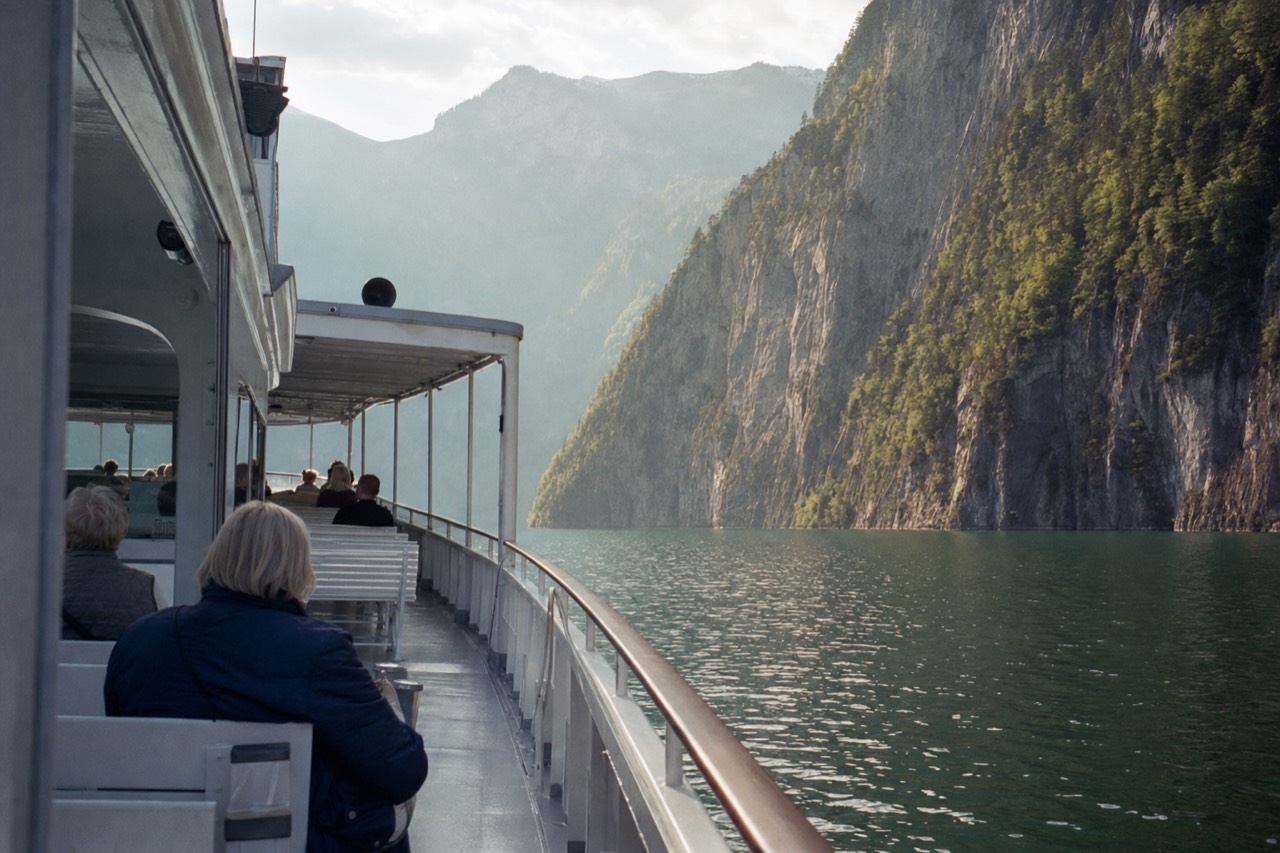
Ask ten travelers which Swiss town is nicer, Lucerne or Interlaken, and you will get a split vote with strong opinions on both sides. That split is not because one town is objectively better. It happens because the two towns answer two different travel styles, and most comparison articles refuse to say so plainly.
Here is the short version. Lucerne is a real, lived-in city with an old town you can wander for hours, a lake you can actually cruise on a historic paddle steamer, and mountains close enough to reach before lunch. Interlaken is a transport hub between two lakes, ringed by peaks, built almost entirely around adventure sports and day-trip logistics. If your ideal day involves a boat deck, a camera and a slow lunch, Lucerne is nicer. If your ideal day involves a harness, a paraglider and a packed schedule of Jungfrau region excursions, Interlaken is nicer.
This article walks through the comparison the way you would actually experience it: the setting, the atmosphere, the day trips, the food, the costs and the practical details that decide the argument. Along the way I will point out where the boat cruise factor, the thing this whole site is about, quietly tips the scales.
Which is nicer, Lucerne or Interlaken?
For most first-time visitors, Lucerne is the nicer town: it has a genuine medieval old town, a covered wooden bridge, a lake with five historic paddle steamers running scheduled cruises, and mountains you can reach in under an hour. Interlaken is the better base only if the Jungfrau region is your sole focus and you plan to move fast every day.
The comparison usually gets framed as a beauty contest, which is the wrong frame. Both towns are set in absurdly attractive surroundings; this is central Switzerland, and the scenery baseline is high everywhere. What separates them is what happens when you step off the train.
In Lucerne, you step off the train and you are ten minutes from the Chapel Bridge, the Jesuit Church, the painted facades of the old town, and a waterfront promenade where boats depart all day. The town itself is the attraction. You can spend a full day in Lucerne without doing a single excursion and feel like you saw something.
In Interlaken, you step off the train into a long, functional strip of hotels, watch shops and adventure agencies. The town is pleasant, green and well-kept, but almost nobody spends a full day inside it. Interlaken is a launchpad: you wake up, you leave, you come back to sleep. The town's own lakefronts, on Lake Thun and Lake Brienz, are a short ride or walk away rather than the center of the action.
That structural difference is the honest core of the debate. Lucerne rewards staying put. Interlaken rewards leaving. And if you are leaning Lucerne, the three most-booked ways to get on the water from its waterfront are worth a look early:
Which town has the better lake and boat experience?
Lucerne, and it is not close. Lake Lucerne is a single, fjord-like lake of roughly 114 square kilometers with a depth of up to 214 meters, served year-round by the official Lake Lucerne Navigation Company fleet, including five historic paddle steamers. Interlaken has no lake of its own; it sits between two lakes, and its boat scene is split between them.
This is the section where I admit my bias up front: this site exists because Lake Lucerne is one of the great cruise lakes of Europe, and the facts back that up. The lake's shape is its superpower. Rather than a round basin, Lake Lucerne folds into arms and bends between steep hillsides, so a cruise keeps revealing new scenery for hours. A scheduled sailing from Lucerne to Vitznau takes about an hour; the full run down to Flüelen takes roughly two hours and forty minutes one way, and the Grand Lake Cruise round trip runs about five and a half hours. You never stare at the same shoreline twice.
The fleet matters too. The Lake Lucerne Navigation Company, known locally as SGV, operates five historic paddle steamers, the oldest of which, the Uri, was built in 1901, alongside fourteen motor vessels. Scheduled services run year-round, with a reduced winter timetable, which means the lake is not a summer-only attraction. In winter you can ride a steamer past snow-covered shores with a warm drink in hand.
Interlaken's lake situation is different in kind. Lake Thun to the west and Lake Brienz to the east are both beautiful, and Lake Brienz in particular has that unreal turquoise color that fills Instagram feeds. But Interlaken's town center sits between them, so every boat trip starts with getting to a landing stage in a neighboring town. The experience is fragmented: a cruise on Brienz, a cruise on Thun, but no single lake that defines the place.
If boats are central to your trip, this one factor settles the question. Lucerne's lake is the town's front yard; Interlaken's lakes are two separate errands.
Which town is better for mountain day trips?
Interlaken wins on raw mountain access: it is the gateway to the Jungfrau region, with more named peaks, railways and viewpoints within a day-trip radius than anywhere else in Switzerland. Lucerne counters with a tighter, easier set of options, including Mt. Pilatus, Mt. Rigi and Mt. Titlis, each reachable with a lake crossing as part of the journey.
If you count famous mountains, Interlaken's corner of the Bernese Oberland is unbeatable. The Jungfrau, the Eiger and the Mönch dominate the skyline, and the region's network of mountain railways, cable cars and hiking trails could fill two weeks without repetition. Interlaken exists to serve that network. For a traveler whose bucket list is Jungfrau-specific, basing anywhere else is a false economy.
But Lucerne's day trips have a quality Interlaken's cannot copy: they start on the water. The classic Pilatus round trip, the so-called Golden Round Trip, begins with a boat across the lake to Alpnachstad, climbs the world's steepest cogwheel railway to the summit, and descends by cable car and panorama gondola to Kriens. The mountain and the lake are one seamless experience rather than two separate boxes to tick. Rigi works the same way, with the boat delivering you to the cogwheel railway at Vitznau in about an hour from Lucerne.
The most popular packaged version of the Pilatus day out combines the cable car, the cogwheel train and the lake cruise in a single booking, and it is worth seeing how that tour is structured before you plan anything:
There is also a pacing argument. Lucerne's big three excursions, Pilatus, Rigi and Titlis, are each comfortable single-mountain days with time left over for an evening stroll. Interlaken's region tempts you into stacking two or three destinations per day, and travelers who try it often describe their Bernese Oberland week as a blur of cable cars. Nicer depends on whether you want breadth or breathing room.
Still weighing whether the Pilatus combo deserves a day of your itinerary?
Which town has more atmosphere and charm?
Lucerne, decisively. Its old town is genuinely medieval, with the 14th-century Chapel Bridge and Water Tower as the focal point, frescoed squares, and a covered bridge you cross because it is simply the way locals walk. Interlaken's center is a pleasant Victorian-era resort strip, handsome but thin on atmosphere, with the real charm pushed out to the surrounding villages.
Charm is subjective until you walk both towns back to back, and then it stops being subjective. Lucerne's old town is compact, car-light in parts, and full of detail: painted building facades, small fountains, alleyways that open onto the river Reuss, and the bridge lions and swans that photographers hunt at sunrise. The town rewards aimlessness. You can cross the Chapel Bridge four times in a day and notice something new each time.
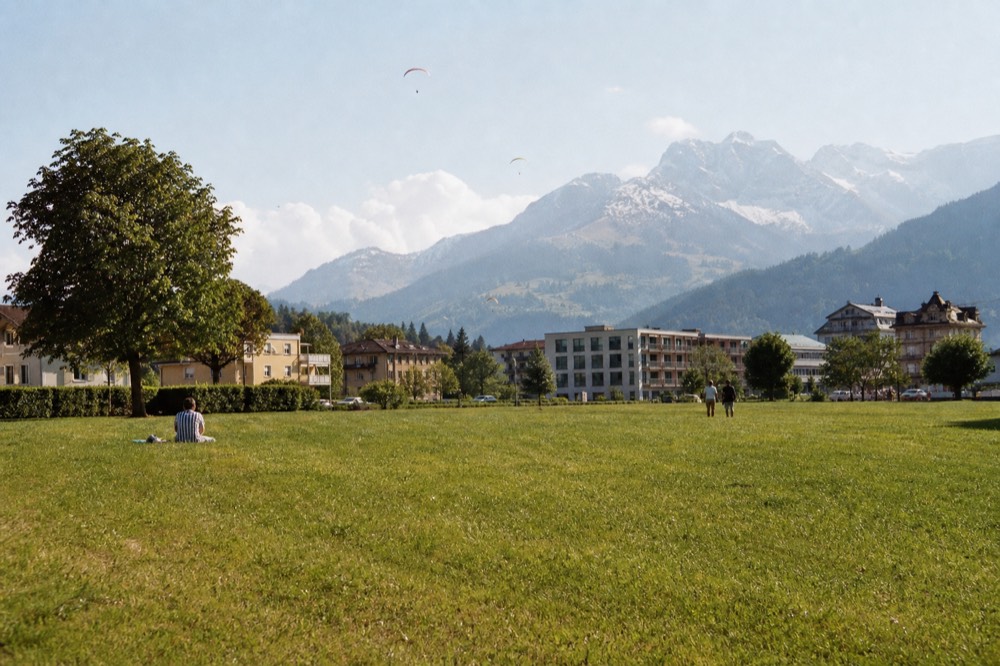
Interlaken has one genuinely lovely asset in its center: the Höhematte, a wide open meadow between the hotels with a view straight up the Jungfrau. Paragliders land on it all afternoon, which is a free show in itself. But beyond that meadow and the promenade along the Aare river, the town's texture is mostly hotels, souvenir shops and agencies. Interlaken's charm is real, it is just located in the villages around it, like the woodcarving town of Brienz or the lakeside parks of Thun, which means more transit and less wandering.
Evenings tell the same story. Lucerne at dusk, with the bridge lit and the lake still, feels like a place. Interlaken at dusk feels like a lobby: everyone is comparing notes on tomorrow's itinerary.
Which is cheaper, Lucerne or Interlaken?
Neither town is cheap, and on paper their costs are similar, but Lucerne gives budget travelers more for less: a CHF 86 second-class day pass covers unlimited scheduled cruises on the entire lake for a day, and Swiss Travel Pass holders ride the scheduled boats free. Interlaken's savings depend on regional passes, and its headline excursions are among the most expensive in the Alps.
Let me be precise about what I can actually verify, because most comparisons invent numbers. On Lake Lucerne, a one-way second-class full-fare ticket from Lucerne to Weggis costs CHF 23.00, and a second-class day pass covering the whole lake costs CHF 86.00 at full fare, any time of year. If you hold a Swiss Travel Pass or a GA Travelcard, scheduled SGV boats are 100% free; the Swiss Half Fare Card gets you 50% off; and the Tell-Pass and Lucerne Travel Pass are also valid. That means for a large category of travelers, the single best attraction in Lucerne costs nothing at all. You can check the current fare tables on the operator's own prices page.
Interlaken's pricing logic is different. The town itself is not more expensive for beds or meals than Lucerne, roughly comparable in most categories. The difference is in what you pay for at the attractions. The Jungfrau region's flagship excursions are famously among the priciest mountain trips in Switzerland, and Interlaken's itineraries push you toward several of them in a single visit. Lucerne's itineraries push you toward the lake, which is either free with your pass or modestly priced without one.
The budget verdict: with a Swiss Travel Pass, Lucerne is dramatically cheaper per memorable hour. Without any pass, the two towns cost about the same to sleep and eat in, but Lucerne's cheapest activities are better.
How do you choose between Lucerne and Interlaken?
Choose Lucerne if you want a walkable, atmospheric base where the top activity, a lake cruise on a paddle steamer, departs from the town center, and mountains are an easy add-on. Choose Interlaken if the Jungfrau region is your main goal, you are traveling in high summer for alpine hiking or adventure sports, or you want the widest possible choice of mountain railways.
A simple way to run the decision for yourself:
| If this describes you | Base in Lucerne | Base in Interlaken |
|---|---|---|
| You want atmosphere, old town wandering, evenings in cafes | Yes | Less so |
| Lake cruising is a priority, not a bonus | Yes | No |
| The Jungfrau or Schilthorn is your dream summit | Possible as a long day trip | Yes |
| You are traveling without a car | Yes, everything is central | Workable, but more connections |
| You hold a Swiss Travel Pass | Yes, boats are free | Pass helps, big lifts cost extra |
| You want paragliding, canyoning, adventure sports | Some options | Yes, it is the hub |
| Trip is 2 nights or fewer | Yes, it is on the main rail line | Too much transit for the payoff |
| Trip is a week with a car | Either works well | Either works well |
Notice how often the Lucerne column wins on logistics. Lucerne sits on the main north-south rail axis, under an hour from Zurich Airport by train, which makes it the natural first or last stop of almost any Swiss itinerary. Interlaken requires a deliberate detour into the Oberland, worth it for the Jungfrau but costly if your time is short.
The strongest single argument for Lucerne, the one I would put to any undecided friend, is that its best experiences are layered rather than sequential. The boat to Vitznau is the cruise you wanted and the transfer to Mt. Rigi at the same time. The lake crossing to Alpnachstad is sightseeing and the first leg of the Pilatus cogwheel railway at the same time. Interlaken's experiences are additive: you pay separately, in money and in hours, for each thing on the list.
What do you actually do on the water at Lucerne?
You choose between scheduled sailings on the official fleet and a growing set of bookable cruises: one-hour panorama yacht and catamaran rounds, a 1.5-hour Lake Uri cruise from Brunnen to Flüelen, steamboat dining experiences, and private boat tours, all departing from or near the Lucerne waterfront.
The scheduled network is the backbone, and with a pass it is essentially free roaming. But the bookable cruises fill specific niches the timetable does not. If you have one free hour between the Pilatus trip and dinner, a one-hour panorama yacht cruise or a one-hour catamaran round trip from the Lucerne jetty fits exactly. If you want the quiet, spectacular arm of the lake that most day visitors never see, the round-trip Lake Uri cruise from Brunnen to Flüelen covers the shoreline of the lake's wildest section. If you want a splurge with a story, the exclusive steamboat experience with a five-course menu runs on one of the historic fleet's vessels.
For a short visit where the lake itself is the whole point, the panorama yacht is the option travelers most often pick:
One practical note that surprises people: poor weather is not, by itself, grounds for a customer-requested refund on scheduled lake cruises, and the boats run in nearly all conditions, including rain and low cloud. Only extreme meteorological situations let the operator reschedule or cancel a sailing. So build your boat day with a weather-proof layer, an indoor saloon, a covered deck, a warm drink, rather than hoping to rebook at the last minute. The full policy sits in the operator's terms and conditions.
Which is better in each season?
Lucerne is the safer shoulder-season and winter choice, because its scheduled boats run year-round and its old town stays alive in cold weather. Interlaken peaks in summer and early autumn, when the high alpine trails and adventure sports are fully open; in deep winter it pivots to serving the ski regions rather than offering its classic lake-and-mountain mix.
Spring is Lucerne's underrated season. The lake is quiet, the steamers are back on their summer timetables, and the cherry blossom season in nearby towns gives the shoreline a softness the postcards miss. Interlaken in spring is a construction site of anticipation: lifts under maintenance, trails still snowy up high, agencies not yet at full throttle.
Summer belongs to Interlaken, with a caveat. The Jungfrau region between June and September is as good as alpine Switzerland gets, and if hiking is your reason to travel, that is your window. The caveat is crowds: the flagship viewpoints queue, and the flagship trains book out. Lucerne in summer is busy too, but the lake absorbs crowds better than a mountain station, because the boats leave continuously and the water does not fill up.
Autumn is the connoisseur's season for Lucerne, and the facts bear this out: the paddle steamer Stadt Luzern runs until 18 October in the 2026 season, and the Uri, the 1901 veteran, runs special winter-themed sailings in November and December. You can ride a historic steamer past autumn-colored shores, then again through low winter mist, on the same lake, without changing towns. Interlaken in late autumn is transitional, with the adventure scene winding down and the ski season not yet up.
For a deeper look at the timing question, see our month-by-month breakdown in the best month to visit Lucerne.
Common questions about Lucerne or Interlaken
Most travelers find Lucerne the better base for a short visit, thanks to its lakeside old town, easy train connections, and the nearby Mt. Pilatus and Rigi excursions. Interlaken suits adventure seekers heading into the Jungfrau region for hiking, skiing, and paragliding. Both towns are scenic and well connected by rail, so if time allows, many visitors combine the two with a scenic train ride between them rather than choosing only one.
Is Lucerne more expensive than Interlaken?
Not meaningfully. Beds and meals cost about the same in both. The difference is activities: Lucerne's lake cruises are cheap or free with a Swiss Travel Pass, while Interlaken's flagship mountain excursions are among the most expensive in Switzerland.
Can you do a boat cruise from Interlaken?
Yes, but not from the town center. Interlaken sits between Lake Thun and Lake Brienz, so boat trips start from neighboring towns' landing stages. Lucerne's cruises, by contrast, depart directly from the city waterfront.
Is Lucerne or Interlaken better without a car?
Lucerne. It sits on the main rail axis, its old town, lakefront and boat jetty are all walkable from the station, and its top excursions connect by boat and rail without any driving. Interlaken is workable without a car but involves more connections.
Which town is better in winter?
Lucerne for a general trip: its scheduled boats run all year on a reduced winter timetable, the steamer Uri runs special winter-themed trips in November and December, and the old town stays lively. Interlaken in winter is mainly useful as a ski-region base.
Can you visit both Lucerne and Interlaken on one trip?
Yes, and it is a good idea. They are connected by scenic rail routes with a change in Meiringen or via Bern, so many travelers spend two or three nights in each. Do Lucerne first for the lake and atmosphere, then Interlaken for the mountains.
The verdict
Lucerne is nicer for a traveler who wants a place to be in, Interlaken for a traveler who wants a list to complete, and the deciding factor is the lake: Lucerne's cruises run year-round from the town's own waterfront, layer sightseeing into every mountain transfer, and cost little or nothing with a Swiss Travel Pass.
Call it this way. If your trip is about being in a place, wandering, eating, cruising, photographing a bridge at dusk, Lucerne is nicer, and the lake is the reason. If your trip is about doing things, ticking summits, hiking high trails, flying off a mountain with a parachute, Interlaken is nicer, and the Jungfrau is the reason.
For the traveler in between, and most of us are, Lucerne is the safer and frankly more charming choice, because its signature experience, a paddle steamer sliding across a folded, fjord-like lake toward a cogwheel railway, is the one thing Interlaken cannot match. If you are leaning Lucerne, start your planning where the site itself started: on the water with Lake Lucerne Boat Cruises. Two more pieces worth reading before you book: is there really a river cruise on Lake Lucerne, and what the rainy month in Switzerland means for a lake-town trip.